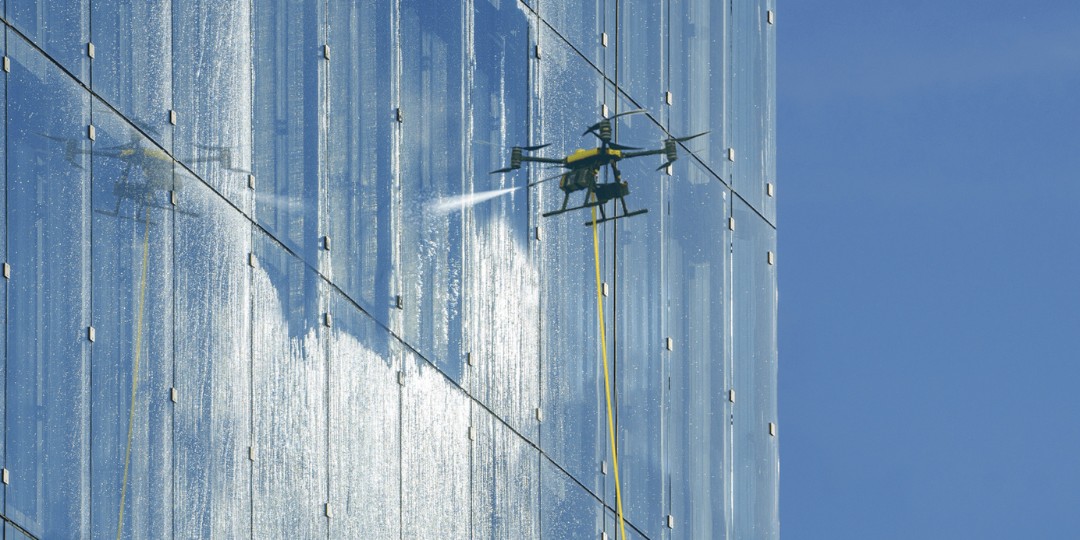
Commercial window cleaning is changing. As buildings become taller, larger and more architecturally complex, maintaining exterior glass can create significant access and logistical challenges for facility managers.
Traditional methods such as lifts, scaffolding, rope access and water-fed poles all have an important place in commercial window maintenance. But advances in drone technology are creating another option for cleaning hard-to-reach exterior glass, while allowing much of the work to be performed with the cleaning crew remaining on the ground.
Drone window cleaning is an emerging technology that uses specialized, tethered cleaning drones to reach exterior glass and other elevated surfaces. For facilities with difficult-to-access windows, it can provide another way to approach exterior maintenance without relying on traditional high-access equipment for every application.
What Is Drone Window Cleaning?
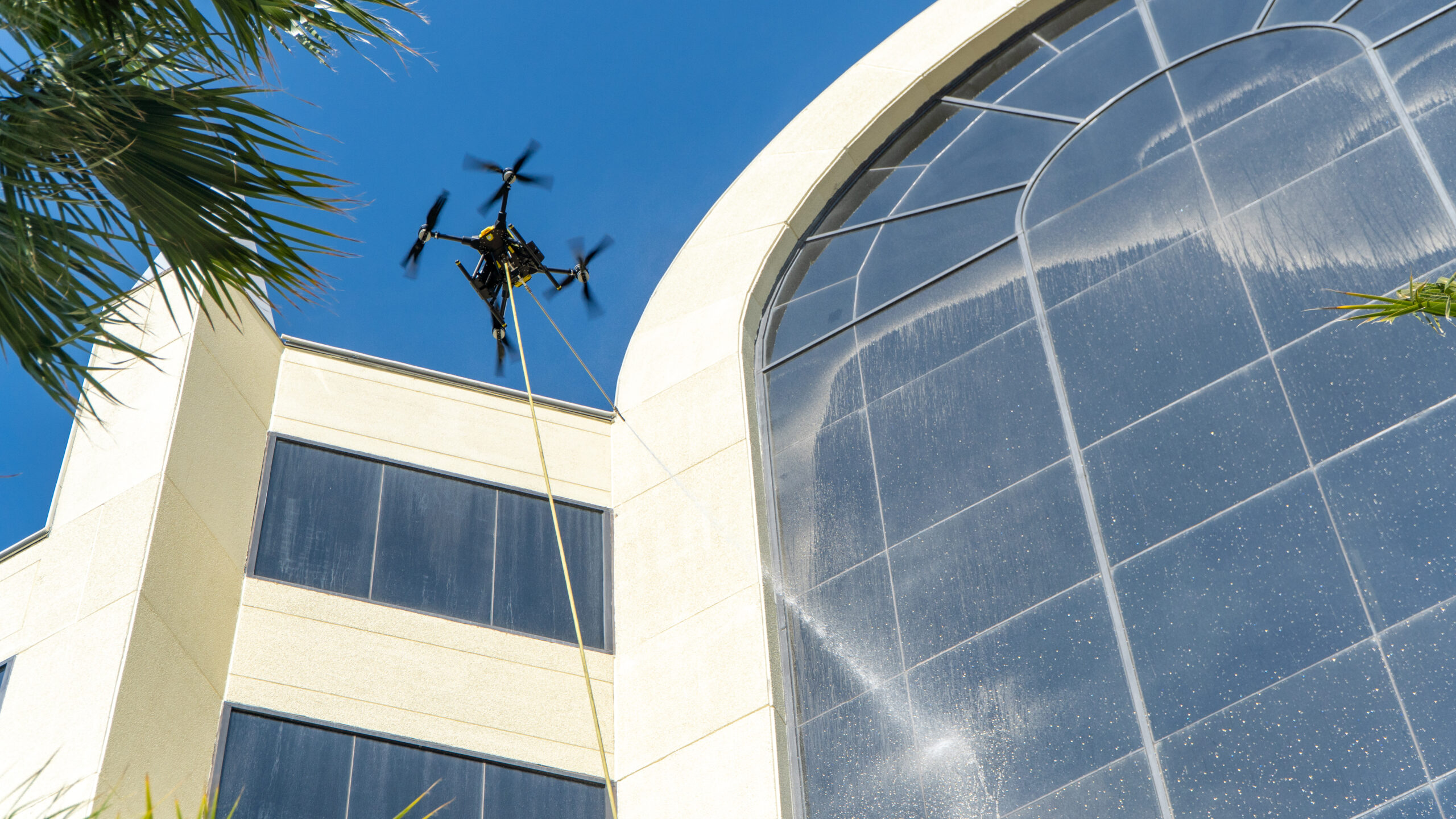
Drone window cleaning uses a specialized aerial system equipped with cleaning equipment to reach elevated exterior surfaces. Unlike recreational drones designed primarily for photography or inspection, cleaning drones are engineered to carry and direct water or cleaning solutions toward building surfaces. They can deliver water or cleaning solutions through a connected cleaning system while using obstacle-detection technology to help maintain positioning near structures.
The drone itself is only one part of the system. A trained operator remains on the ground to control the equipment and manage the cleaning process. That distinction is important: drone window cleaning doesn’t eliminate the need for trained professionals, it changes how they access the building.
Why Is Access Such a Big Part of Window Cleaning?
For a one or two story building, reaching exterior glass may be relatively straightforward. For a multi-story commercial facility, however, access can become one of the biggest considerations. Depending on the building, traditional high-access cleaning may require:
- Aerial lifts
- Scaffolding
- Rope access
- Specialized access equipment
- Extended setup and breakdown
- Work areas to be secured below
- Coordination around building occupants and pedestrians
These requirements can make exterior window cleaning more complex, particularly when windows are located above entrances, courtyards, landscaping, parking areas or other difficult-to-access locations. Drone technology provides another option by allowing the cleaning equipment to reach elevated surfaces from the ground.
How Does Drone Window Cleaning Work?
While the exact process depends on the building and equipment being used, a typical drone cleaning operation involves several components working together.
1. The Building Is Assessed
Before cleaning begins, the facility and exterior surfaces should be evaluated to determine whether drone cleaning is appropriate.
Factors may include:
- Building height
- Window configuration
- Surface condition
- Access around the building
- Nearby structures and obstacles
- Wind and weather conditions
- Occupant and pedestrian activity
- The type of cleaning required
Not every building or window is automatically a candidate for drone cleaning. A site assessment helps determine the appropriate cleaning approach.
2. The Drone Is Positioned From the Ground
The operator controls the drone from a safe location on the ground while the system moves the cleaning equipment into position. Specialized systems can incorporate obstacle-detection and positioning technology to help the drone operate near building surfaces.
3. Water or Cleaning Solution Is Applied
Cleaning drones can be connected to water and cleaning systems on the ground. Depending on the application, the equipment can be configured for pressure washing or soft washing and can spray water, soap, detergent and other cleaning solutions. For exterior glass, the cleaning approach must be selected based on the condition of the glass and the type of contaminants being removed.
4. The Surface Is Cleaned and Inspected
The drone handles the elevated portion of the cleaning process while the ground crew manages the operation and can address areas requiring additional attention. This combination of technology and hands-on expertise is important. Drone cleaning is not simply a matter of flying a machine around a building, it is a professional cleaning process that still requires planning, surface knowledge and quality control.
What Are the Benefits of Drone Window Cleaning?
Reduced Need for High-Access Equipment
One of the most significant advantages is the ability to reach elevated surfaces without automatically requiring lifts, scaffolding or rope-access systems. That doesn’t mean traditional access methods are obsolete. Rather, drone technology gives facility managers another tool to consider when planning exterior maintenance.
Keeping Workers on the Ground
Working at height introduces additional safety considerations. Drone technology can reduce the need for workers to physically climb or work from elevated platforms for certain cleaning applications.
Accessing Difficult Areas
Some buildings simply aren’t designed with easy window-cleaning access in mind. Large glass façades, multi-story buildings and irregularly shaped exterior surfaces can create challenging access conditions. Drone technology can be particularly useful where reaching the surface with conventional equipment is difficult.
Potentially Less Disruption
Traditional high-access work can require equipment, staging areas and work zones around a building. Because drone cleaning can be operated from the ground, it may reduce some of the logistical requirements associated with elevated access.
Is Drone Window Cleaning Replacing Traditional Window Cleaning?
No. Drone cleaning should be viewed as another tool in the commercial window-cleaning toolbox, not a replacement for every existing method.
Different buildings have different requirements. A facility may still benefit from traditional methods such as water-fed poles, hand washing or other access systems depending on the height, location and condition of the glass.
In some cases, drone cleaning may be the most practical solution for certain exterior areas while traditional methods are used elsewhere. The goal isn’t to use the newest technology simply because it is new. The goal is to identify the right cleaning method for the building, surface and maintenance requirements.
A New Option for Commercial Window Maintenance
DPM Surface Care is proud to now offer drone window cleaning as a new service for commercial facilities in East Tennessee. If your facility has hard-to-reach windows, large glass façades, or exterior areas where traditional cleaning methods can be challenging, contact DPM Surface Care to learn more about our new drone window cleaning service and find out if it’s the right solution for your facility.