Hotel carpets face a level of traffic and soiling that most commercial flooring simply does not. From guest rooms and hallways to lobbies, conference spaces, and dining areas, hotel carpet is exposed to luggage, outdoor soil, food and beverage spills, body oils, and thousands of footsteps, all while the property remains operational.
That is why hotel carpet cleaning requires more than an occasional deep clean. A strategic, traffic-based maintenance program can protect carpet appearance, extend flooring life, and help maintain the cleanliness guests expect.
Hotel Carpets Are a Guest Experience
Flooring is one of the first things guests notice when they enter a property. In a 2023 survey of more than 2,000 adults conducted by The Harris Poll on behalf of Whittaker, 83% of respondents said well-maintained carpet improves their confidence in a facility’s cleanliness. For hospitality environments specifically, 55% said clean carpet makes them more confident in the overall cleanliness of the facility. (ISSA — Whittaker Survey on Carpet Cleanliness)
For hotel operators, that makes carpet maintenance more than an aesthetic concern. Stains, traffic lanes, discoloration, and matted fibers can influence how guests perceive the entire property.
Foot Traffic Drives Soil Into Carpet Fibers
Hotel carpet experiences different levels of traffic depending on its location. Entryways and lobbies receive constant exposure to outdoor contaminants, while guest hallways experience concentrated traffic from guests, housekeeping teams, luggage carts, and service personnel.
According to the Carpet and Rug Institute (CRI), approximately 85% of soil tracked into buildings is dry soil, making routine vacuuming one of the most important components of a commercial carpet maintenance program. (Carpet and Rug Institute — Sustainable Carpet Installation and Maintenance) However, vacuuming cannot remove everything. Oily soils, spills, and deeply embedded particulate matter require periodic professional cleaning.
High-Traffic Areas Need More Frequent Attention
A hotel should not necessarily clean every carpeted area on the same schedule. CRI recommends daily vacuuming for high-traffic areas, twice-weekly vacuuming for medium-traffic areas, and weekly vacuuming for light-traffic areas. (Carpet and Rug Institute — Cleaning and Maintenance) For hotels, this means maintenance schedules should be based on traffic intensity, soil load, carpet construction, and location.
For example:
- Lobbies and entrances: Frequent vacuuming and spot treatment, with more intensive interim and restorative cleaning as needed.
- Guest hallways: Regular vacuuming and targeted cleaning of traffic lanes and elevator areas.
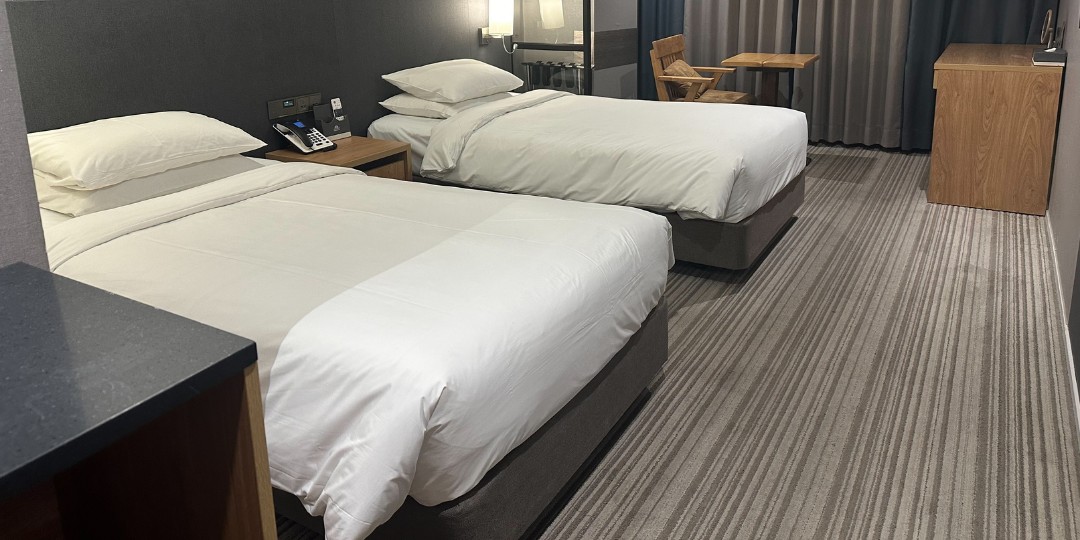
- Guest rooms: Routine vacuuming, immediate spot treatment, and scheduled deep cleaning.
- Meeting and conference spaces: Cleaning frequency based on event schedules and occupancy.
- Restaurants and dining areas: More frequent soil and spot management because of food, beverage, and grease-related contamination.
CRI’s commercial carpet guidance recommends establishing cleaning frequencies based on factors such as carpet location, use, traffic intensity, soil buildup, and the effectiveness of routine maintenance.
Professional Cleaning Removes What Vacuuming Cannot
Vacuuming is the foundation of a hotel carpet maintenance program, but it cannot remove all contaminants. Oily soils and deeply embedded particles require periodic restorative cleaning. For commercial facilities, CRI recommends professional deep cleaning at regular intervals, with high-traffic areas potentially requiring more frequent cleaning than lower-traffic areas.
Importantly, professional cleaning should not always wait until carpet looks visibly dirty. By the time soil becomes obvious, abrasive particles may already be contributing to fiber wear and traffic-lane formation. Depending on the carpet fiber, construction, soil conditions, and operational requirements, professional cleaning may include hot water extraction, low-moisture cleaning, encapsulation, or other manufacturer-approved methods.
Moisture Control Is Critical in Hotels
Cleaning hotel carpets presents another challenge that is particularly important for facility and hotel managers: downtime. Excess moisture can extend drying times and create problems with wicking, resoiling, odors, or disruption to guest areas. Low-moisture interim cleaning can be useful in areas that need to return to service quickly.
Professional technicians should consider carpet construction, humidity, ventilation, equipment recovery, and solution application when selecting a cleaning method. The objective is effective soil removal while controlling moisture and minimizing operational disruption.
A Proactive Maintenance Program for Hotel Carpets
The best maintenance strategy for hotel carpets is proactive rather than reactive. Instead of waiting for carpet to look visibly dirty, hotel and facility managers should establish a program based on traffic patterns and soil conditions.
A comprehensive program should include:
- Daily or scheduled vacuuming based on traffic
- Immediate treatment of spills and spots
- Routine inspection of high-traffic areas
- Interim cleaning to maintain appearance between deep cleans
- Periodic restorative carpet cleaning
- Proper chemical selection and application
- Moisture and drying-time management
- Documentation of cleaning and maintenance activities
This approach helps reduce premature carpet wear while maintaining the appearance and cleanliness guests expect.
Protect Your Hotel Carpets and Flooring Investment
DPM Surface Care provides professional commercial carpet cleaning and maintenance solutions designed around the specific needs of hospitality facilities. Our team can evaluate traffic patterns, carpet conditions, soil buildup, and operational requirements to develop a maintenance strategy that protects your flooring investment while minimizing disruption to your property.
Want to extend the life of your hotel carpets? Contact DPM Surface Care to schedule a complimentary professional carpet evaluation.