Terrazzo is known for its durability, longevity, and distinctive polished appearance. When properly maintained, it can withstand decades of heavy foot traffic in commercial facilities while continuing to provide a clean, professional appearance. But even a well-maintained terrazzo floor can eventually develop a cloudy, hazy, or dull appearance. For facility managers, the important question isn’t simply how do I make it shiny again? The real question is:
What is causing the cloudiness, and what treatment will correct it without damaging the floor?
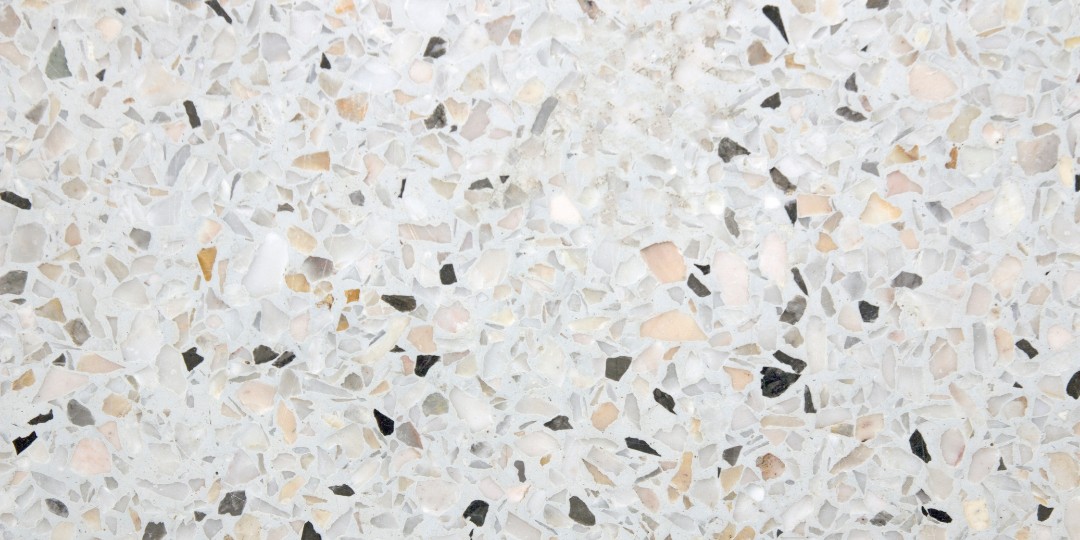
Terrazzo is a composite surface made from aggregate, often marble, granite, glass, or other materials, bound together with either a cementitious or resin-based matrix. Because of this composition, the appearance of a cloudy floor can result from several very different conditions, ranging from cleaner residue and improper maintenance to chemical etching, worn finishes, moisture, or deterioration of the polished surface. Identifying the cause before selecting a treatment is critical.
What Causes a Terrazzo Floor to Look Cloudy?
There isn’t one universal cause of terrazzo haze. In commercial facilities, cloudiness is commonly associated with residue buildup, surface wear, chemical exposure, moisture, or an improperly maintained protective coating.
Here are some of the most common causes facility managers should consider.
1. Cleaning Product Residue
One of the simplest causes of a cloudy floor is also one of the most frequently overlooked: cleaner residue. Using too much cleaning solution, failing to properly rinse the floor, or repeatedly using products that leave a film can create a layer of residue over the terrazzo surface. Instead of allowing the natural characteristics of the polished surface to reflect light, that film diffuses the light and creates a dull or hazy appearance.
This can be especially noticeable in areas with:
- Frequent mopping
- High foot traffic
- Heavy soil loads
- Inconsistent dilution ratios
- Inadequate rinse procedures
- Repeated use of “shine-enhancing” products
Terrazzo maintenance recommendations generally emphasize appropriate cleaning products, controlled application, and thorough rinsing to prevent residue buildup.
2. The Wrong Chemical May Have Damaged the Surface
Not all floor cleaners are appropriate for terrazzo. Terrazzo contains mineral-based aggregates and, in many installations, a cementitious matrix. Exposure to highly acidic or highly alkaline products can affect the surface and potentially degrade the sealer or alter the appearance of the terrazzo itself.
The National Terrazzo & Mosaic Association specifically cautions against treating terrazzo like a generic hard floor surface and notes that waxes and inappropriate products can contribute to dulling and yellowing. (NTMA) Chemical damage can be more difficult to correct than simple residue because the problem may no longer be sitting on the surface, it may have altered the surface itself.
This is an important distinction: If a cloudy floor can be cleaned away, you’re dealing with a surface contaminant. If the terrazzo has been chemically etched, cleaning alone won’t restore its original appearance.
3. The Polish Has Been Worn Down by Foot Traffic
Terrazzo may be extremely durable, but it isn’t maintenance-free. In a high-traffic facility, microscopic scratching and surface wear gradually reduce the floor’s ability to reflect light evenly. Entrances, corridors, elevator lobbies, and areas around reception desks are often the first places where this becomes visible.
Over time, a once-reflective surface can become: Glossy → Dull → Hazy → Visibly Worn
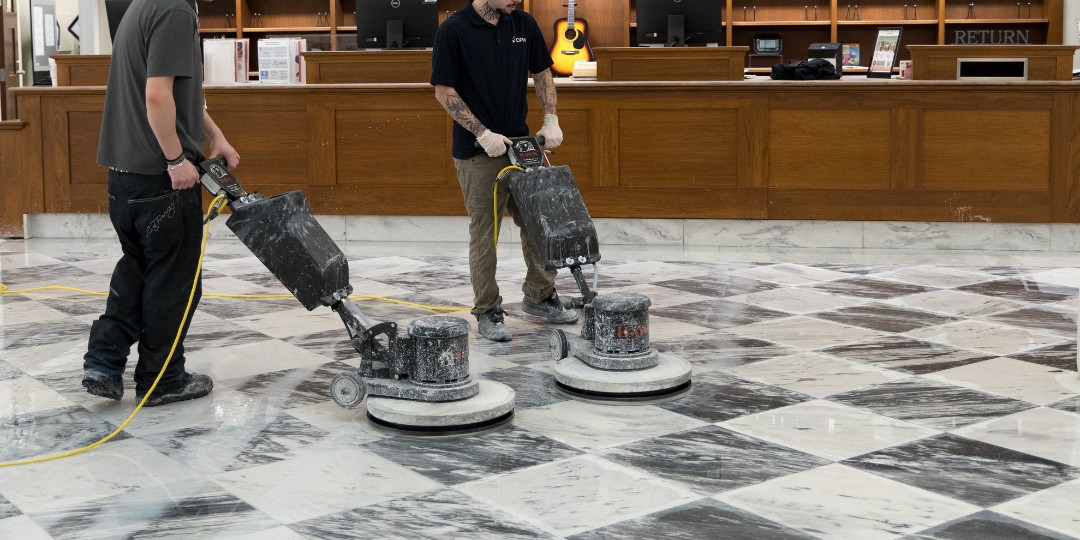
This doesn’t necessarily mean the terrazzo needs to be replaced. In many cases, the floor may simply require professional reconditioning or polishing to restore the clarity of the surface. Professional maintenance guidance recognizes polishing and reconditioning as part of a terrazzo floor’s long-term maintenance strategy. (3M)
For facility managers, this distinction matters because restoration can often extend the useful life of an existing floor rather than committing the facility to a costly replacement project.
4. A Worn or Improperly Applied Sealer Can Create Haze
Sealers are an important part of terrazzo floor maintenance, but the wrong product or improper application can create its own problems. A sealer can become uneven, deteriorated, or visually inconsistent over time. Applying additional product without properly evaluating what is already on the floor can compound the problem.
The National Terrazzo & Mosaic Association notes that penetrating sealers are used on cement terrazzo to improve resistance to staining, dirt, and wear, while epoxy terrazzo is non-porous and may use a sealer primarily for protection and appearance. It also distinguishes sealers from waxes, which can build up and contribute to yellowing and dulling. (NTMA) This is why “just add another coat” isn’t necessarily the right solution.
Before resealing, a professional should determine:
- What type of terrazzo is installed?
- Is it cementitious or epoxy?
- What sealer or finish is currently present?
- Is the existing coating compatible with the proposed treatment?
- Is there residue or buildup that needs to be removed?
- Is the terrazzo itself damaged?
- Is moisture contributing to the problem?
5. Moisture Can Contribute to Cloudiness
Moisture is another potential culprit, particularly when a topical coating or sealer is involved.
If a coating is applied before the substrate has adequately dried, moisture can become trapped beneath the coating and create a hazy or cloudy appearance. Moisture-related problems can also occur after water intrusion, flooding, or other significant moisture events.
Cloudiness caused by moisture can look very different from ordinary traffic wear, which is why diagnosis should come before treatment. Simply applying another coating over the affected area may conceal the problem temporarily or make it more difficult to correct later.
How Can You Tell What’s Causing the Cloudiness?
The most useful first step is to look at where, when, and how the cloudiness appears. Consider these questions:
- Is the entire floor cloudy? A uniform haze may point toward cleaner residue, coating issues, or an overall maintenance problem.
- Is the cloudiness concentrated in high-traffic areas? That may indicate surface wear, scratching, or deterioration of the polished finish.
- Are there distinct white or dull patches? Localized patches can indicate chemical exposure, spills, moisture issues, or isolated surface damage.
- Did the problem appear after a cleaning or refinishing project? If so, review the products and procedures used immediately before the change occurred.
- Does the floor look worse under certain lighting? This can be an indication that the surface has lost its clarity or uniform polish rather than simply being dirty.
- Has the floor recently experienced water intrusion? If yes, moisture should be considered before applying additional sealer or finish.
These observations can help narrow down the cause, but a visual inspection alone isn’t always enough to determine the appropriate restoration method.
Why Facility Managers Shouldn’t Simply “Clean It Harder”
One of the most common reactions to a dull or cloudy terrazzo floor is to increase the aggressiveness of the cleaning process. That can be a mistake.
More aggressive chemicals, excessive scrubbing, or inappropriate abrasive methods can potentially worsen an already damaged surface. Terrazzo maintenance guidance recommends appropriate cleaning products and warns against harsh chemicals and abrasive treatments that can damage the surface. (International Masonry Institute)
A cloudy floor isn’t necessarily a dirty floor. If the problem is chemical etching, surface wear, or coating failure, additional cleaning won’t address the underlying issue. The goal should be to identify the cause of the appearance change, then select the least aggressive treatment capable of correcting it.
When Does Terrazzo Need Professional Restoration?
If routine cleaning isn’t restoring the appearance of the terrazzo floor, it’s time to evaluate whether the surface needs more than janitorial maintenance.
Professional terrazzo floor restoration may involve some combination of:
- Deep cleaning
- Removal of residue or existing finishes
- Diamond abrasive honing
- Polishing
- Surface refinement
- Repair of damaged areas
- Sealer application
- Development of an ongoing maintenance program
The exact process depends on the terrazzo system and its current condition. Restoration specifications call for evaluation, cleaning, appropriate surface preparation, polishing, and compatible sealing rather than applying a one-size-fits-all treatment.
The objective isn’t simply to make the floor shiny. A professional restoration should address the condition of the terrazzo while establishing a maintenance strategy that helps preserve the result.
Prevention Is Less Expensive Than Restoration
For facility managers responsible for operating budgets, preventing premature deterioration is often more valuable than repeatedly correcting it. A well-designed terrazzo floor maintenance program should account for:
Daily soil removal
Dust and grit can act as abrasives when repeatedly tracked across the floor. Regular dust mopping and removal of particulate matter helps reduce this wear.
Proper cleaning chemistry
Use products appropriate for the specific terrazzo system and follow manufacturer dilution recommendations.
Controlled moisture
Avoid allowing cleaning solutions to dry on the floor and ensure appropriate drying before applying protective products.
Routine inspection
Don’t wait until a lobby looks visibly dull before evaluating the floor. Monitoring high-traffic areas allows maintenance teams to address wear before more intensive restoration is required.
Strategic restoration
A planned polishing or restoration program can help maintain the appearance and extend the service life of the existing flooring.
The DPM Surface Care Approach to Terrazzo Restoration
At DPM Surface Care, we approach terrazzo as a long-term building asset, not simply another floor that needs to be cleaned.
When a facility’s terrazzo begins to look cloudy, dull, or inconsistent, our first priority is diagnosis. We evaluate the condition of the surface, identify potential sources of residue or damage, and determine whether the appropriate solution is cleaning, polishing, restoration, or another treatment. That distinction matters.
A facility manager shouldn’t have to guess whether a floor needs another cleaning, a new finish, or a complete restoration. The right approach depends on the condition and composition of the terrazzo and the history of maintenance performed on it. Our goal is to help facility managers restore the appearance of their terrazzo, protect their investment, and develop a maintenance strategy that keeps the floor performing for years to come.
Is Your Terrazzo Floor Looking Cloudy?
If your facility’s terrazzo floor has developed a cloudy, dull, or hazy appearance, don’t assume the floor needs to be replaced or that another round of aggressive cleaning will solve the problem.
DPM Surface Care can evaluate the condition of your terrazzo and recommend the appropriate cleaning, polishing, or restoration approach. Contact DPM Surface Care to schedule a free site evaluation and learn what your terrazzo floor needs to look its best again.