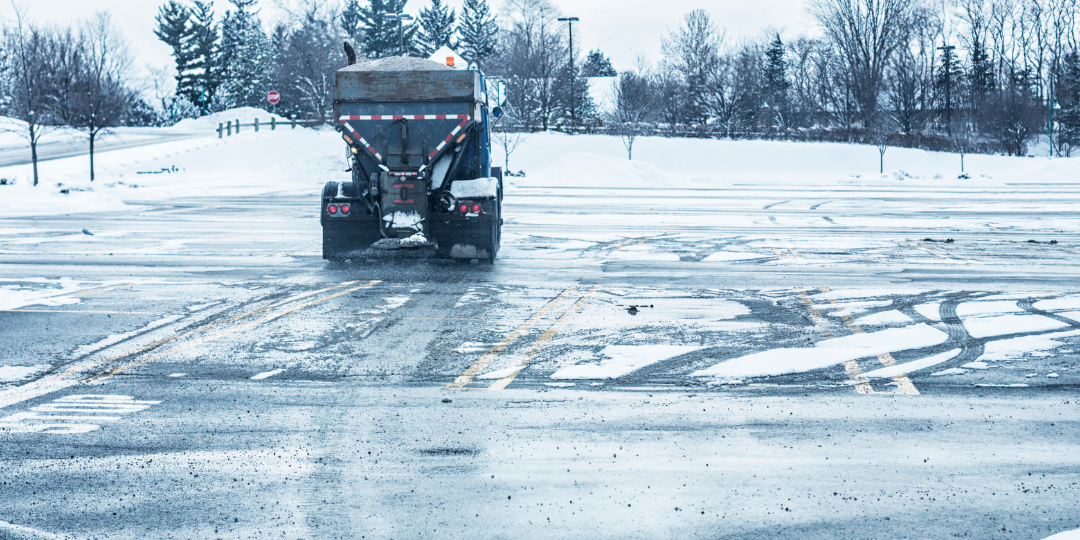
In Tennessee, winter weather doesn’t always mean several inches of snow. More often, the winter maintenance challenge is cold rain, freezing temperatures, ice, occasional snow, wet parking lots, muddy walkways and the salt or brine used to keep surfaces safe. And while a winter storm may only last a few hours, the maintenance effects can follow people into your building for days.
For facility managers, property managers and building owners across Middle and East Tennessee, winter weather is less about preparing for months of snow and more about preparing for rapid changes in temperature and conditions that can turn wet surfaces into icy ones and send moisture, salt, mud and grit straight through the front door.
Think about the path winter weather takes: Parking lot → sidewalk → entrance → lobby → corridors → elevators
At every step, something from outside is transferred farther into the building. Understanding that path can help facility teams take a more proactive approach to winter maintenance, protecting floors, managing moisture and reducing unnecessary wear before small seasonal problems become larger maintenance issues.
Tennessee Winter Weather Is More Than Snow
If you manage a property in Tennessee, you know that winter doesn’t necessarily look like a postcard covered in snow. Nashville averages just 4.7 inches of snowfall per year, with measurable snowfall occurring on an average of about six days. At the same time, the average first minimum temperature of 32°F occurs around November 11.
That means facilities may spend far more time dealing with rain, moisture, freezing temperatures and occasional ice events than with significant accumulations of snow. Tennessee’s transportation agencies prepare for exactly this type of variability, using salt brine as an anti-icing treatment before winter weather and salt when ice and snow accumulate. For commercial properties, that creates a different type of winter maintenance challenge. The issue isn’t necessarily how much snow is on the ground. It’s what winter weather brings with it, and what gets tracked into your building.
1. It Starts in the Parking Lot
The parking lot is the first place where winter conditions begin affecting your facility. A typical Tennessee winter can bring rain followed by freezing temperatures, creating slick surfaces and standing water. During an ice or snow event, parking areas may also receive salt or brine treatments. Those materials don’t simply disappear when temperatures rise. Vehicles and foot traffic can move water, mud, salt and grit toward your building’s entrances.
What facility managers should watch for:
- Standing water
- Areas with poor drainage
- Cracks or deteriorating concrete
- Repeatedly wet areas
- Accumulated salt or other deicing materials
- High-traffic pedestrian routes
- Areas where water freezes and thaws repeatedly
Freeze-thaw cycles are particularly important for concrete and other exterior surfaces. Water can enter existing cracks or porous areas, freeze and expand, and contribute to deterioration over time. Winter is not necessarily when the damage starts. It can simply be when existing surface problems become more noticeable. That’s why inspecting concrete and exterior surfaces before winter weather arrives can be an important part of preventive maintenance.
2. The Sidewalk: Where the Problem Moves Inside
The sidewalk is the transition point between your parking area and your building. Even when there is no significant snow accumulation, winter rain and freezing temperatures can leave sidewalks wet, slick and contaminated with dirt, mud or deicing materials. Then people walk across them. Every employee, tenant, or visitor who enters the building can carry some of that material on their shoes.
That can mean: Water → salt → grit → mud → interior flooring
The Tennessee Department of Transportation specifically prepares for both snow and ice conditions across the state, including the use of salt brine before anticipated winter weather. For facility managers, the important consideration is what happens after those treatments are applied. The goal is to maintain safe exterior walking surfaces while also limiting how much residue and moisture gets transferred into the building.
3. The Entrance Is Your First Line of Defense
Once someone reaches the front door, your facility’s entrance becomes the first opportunity to stop winter contaminants from traveling farther inside. This is where entrance matting becomes particularly important. A properly maintained entrance system can help capture moisture and debris before it reaches more expensive interior flooring. But during wet winter weather, mats can quickly become saturated. A mat that is full of water, salt and debris isn’t going to perform as effectively as a clean, properly maintained mat.
During winter weather, monitor:
- Entrance mat condition
- Moisture around doorways
- Salt residue
- Mud and grit
- Wet footprints
- Floor transitions
- Frequency of cleaning
The objective isn’t simply to make the entrance look clean. It’s to intercept winter contaminants before they become a building-wide maintenance issue.
4. The Lobby: Where Winter Contaminants Become a Floor-Care Problem
Once moisture and debris make it through the entrance, the lobby takes the next hit. This is often where you start seeing the evidence:
- Wet footprints
- Mud
- Salt residue
- Grit
- Carpet soiling
- Floor finish wear
- Increased cleaning demands
And because commercial buildings can have several different flooring materials, the appropriate maintenance approach can vary considerably.
Carpet
Winter moisture and soil can become trapped in carpet fibers, while grit can contribute to abrasive wear in high-traffic areas.
VCT and LVT
Grit and sand can act as abrasives under repeated foot traffic. Salt and other residues can also accumulate if they’re not properly removed.
Rubber Flooring
Rubber surfaces require cleaning methods appropriate for the material. Residue and moisture should be managed without using products or methods that can negatively affect the flooring.
Terrazzo and Natural Stone
These surfaces require specialized care. Abrasive debris, residue and improper cleaning methods can affect both appearance and surface condition.
The key takeaway: Winter maintenance isn’t one-size-fits-all. The right strategy depends on the flooring material, the level of traffic and the type of contaminants being introduced.
5. Corridors Become the “Winter Traffic Highway”
The lobby isn’t the final destination. People continue moving through corridors, offices, conference rooms, restrooms and common areas, taking winter contaminants with them. This makes high-traffic corridors a kind of winter traffic highway. Every trip across the floor can redistribute moisture, grit and residue. And when abrasive particles become trapped under footwear, repeated foot traffic can contribute to wear in heavily traveled areas. This is why square footage alone shouldn’t determine a floor-care strategy. A 1,000-square-foot hallway that receives hundreds of people every day may require more attention than a much larger area with minimal traffic.
A proactive approach means identifying:
- Main pedestrian routes
- Building entrances
- Elevator lobbies
- High-traffic corridors
- Areas where moisture repeatedly accumulates
- Flooring that is showing accelerated wear
Instead of treating every area exactly the same, facility teams can prioritize maintenance based on traffic, surface type and condition.
6. Don’t Forget the Elevators
Elevators are easy to overlook, but they can receive some of the highest concentrations of winter traffic in a commercial building. Consider the journey:
- Someone walks across a wet parking lot.
- They cross the sidewalk.
- They enter through the lobby.
- They walk across the entrance flooring.
- Then they step into the elevator.
All of that moisture, salt and grit can end up concentrated in a relatively small space. Elevator floors, thresholds, corners and transitions deserve attention during winter inspections, especially in buildings with heavy daily traffic. The appropriate cleaning process will depend on the flooring material, whether it’s rubber, resilient flooring, tile or another surface.
7. The Biggest Winter Problem May Not Be Snow
For Tennessee facilities, the more important question may be: What happens when temperatures fluctuate around freezing? A winter storm doesn’t have to produce significant snowfall to create facility maintenance concerns.
A period of rain followed by freezing temperatures can create ice outdoors. When temperatures rise again, that ice melts, creating additional moisture. Then another cold front arrives. This repeated cycle can affect exterior surfaces and increase the amount of moisture entering the building.
It can also mean that facility teams are dealing with changing conditions from one day to the next rather than following a predictable “snow season” maintenance schedule. That’s why winter preparation in Tennessee should focus on moisture management, surface condition and rapid response to changing weather conditions, not just snow removal.
8. Salt and Grit Don’t Stop Working When the Ice Is Gone
Deicing materials serve an important purpose during winter weather, but once they enter your facility, they become a maintenance consideration. Salt residue can be tracked onto interior flooring, while sand and grit can become abrasive under foot traffic. That means a winter maintenance plan shouldn’t stop when the pavement dries. Facility teams should also consider what has been brought indoors and how quickly it needs to be removed.
Pay particular attention to:
- Entryways
- Lobby flooring
- Elevator floors
- High-traffic corridors
- Carpeted entrances
- Hard-floor transitions
Removing contaminants before they are repeatedly walked across the surface can help minimize buildup and unnecessary wear.
9. Winter Maintenance Is About More Than Appearance
A dirty floor may be the most obvious sign that winter weather is affecting your facility, but appearance isn’t the only consideration. Wet or slippery walking surfaces can create safety concerns, while accumulated grit and residue can contribute to premature wear.
OSHA’s winter-weather guidance specifically identifies slippery surfaces as a winter hazard and recommends addressing snow and ice promptly. OSHA’s walking-working surfaces requirements also address keeping floors clean, orderly and as dry as feasible.
A Tennessee-Friendly Winter Maintenance Checklist
Rather than preparing for months of snow, facilities across Middle and East Tennessee can focus on preparing for short-duration winter weather events and rapidly changing conditions.
Before winter weather arrives:
- Inspect parking areas and sidewalks
- Check drainage and areas where water collects
- Look for cracks or deterioration in concrete
- Inspect entrance mats
- Identify high-traffic areas
- Evaluate the condition of interior flooring
- Review procedures for wet-weather and ice events
When freezing weather is expected:
- Monitor exterior walking surfaces
- Address ice and standing water promptly
- Monitor salt/brine accumulation
- Increase attention to entrances
- Check mats before and during periods of heavy traffic
- Watch for moisture being tracked into lobbies and corridors
After a winter weather event:
- Remove accumulated salt and residue
- Deep clean heavily affected areas as needed
- Inspect flooring for increased wear
- Check exterior concrete for areas of concern
- Document recurring problem areas
- Address maintenance issues before the next freeze
Don’t Wait for the Weather to Expose Your Maintenance Gaps
In Tennessee, winter facility maintenance isn’t about preparing for months of snow. It’s about being ready for the wet, cold, icy and unpredictable conditions that can arrive with relatively little warning. A few inches of snow isn’t necessarily the biggest concern. Sometimes it’s a freezing rain event, a hard freeze after a rainy day or repeated temperature swings that create the biggest maintenance challenges.
At every step, facility teams have an opportunity to manage moisture, salt, grit and debris before they travel farther into the building. A proactive approach can help protect flooring, maintain cleaner and safer walking surfaces, and extend the life of the surfaces your facility depends on every day.
Is your facility ready for winter?
DPM Surface Care provides commercial floor care, concrete care and exterior surface maintenance throughout Middle and East Tennessee. A professional site assessment can help identify areas that may need attention before winter weather, and the maintenance challenges that come with it, arrive. Contact DPM Surface Care to schedule a free site assessment!